

The tail is the part of the board that decides how it turns, how it holds in a wave face, and how loose or locked-in it feels underfoot. A narrower tail (pin, diamond) holds better in bigger, more powerful surf. A wider tail (squash, fish) releases easier and feels quicker in small, weaker waves. Everything else on a board, rocker, rail, concave, works with the tail shape, not around it. We've shaped and glassed thousands of boards across every one of these tails at our shop in Costa Mesa, CA, so here's the difference in plain terms, not shaper jargon.
In this article
- Squash tail
- Round tail
- Pin tail
- Swallow tail
- Fish tail
- Bat tail (diamond tail)
- Comparison table
- Which to choose
- FAQ
What's a Squash Tail Best For?
A squash tail is a rounded tail with the corners cut off square. It's the most common shape on shortboards for a reason: it gives you a wide tail for drive and speed through turns, but the clipped corners let you release the tail quickly when you want to change direction. It works in almost anything from weak beach break to solid, well-shaped waves.
If you're not sure what tail you want, a squash tail is the safe, versatile default. Most riders never need a reason to move off it.
What's a Round Tail Best For?
A round tail is exactly what it sounds like: a smooth curve with no corners at all. Less surface area than a squash tail means less catch on the rail during a turn, so the board holds a line longer and feels more controlled in bigger or more powerful surf. It sacrifices a bit of the quick, snappy release a squash tail gives you.
Round tails show up most on step-up boards and boards built for down-the-line speed rather than tight, vertical turns.
What's a Pin Tail Best For?
A pin tail narrows to a point. It's built for one job: holding on to the face of a big, fast, powerful wave without the tail sliding out. Less tail area means less lift and less looseness, which is exactly what you want when the wave itself is providing the speed and power.
Pin tails show up almost exclusively on guns and step-ups. If you're not surfing waves with real size and push behind them, a pin tail will feel dead and hard to turn.
What's a Swallow Tail Best For?
A swallow tail cuts a V-shaped notch into the tail, creating two points instead of one. Those two points act like two narrow pin tails, giving you hold and control, while the notch between them softens the overall tail area so the board still feels lively in smaller surf. It's a middle ground: more hold than a squash tail, more forgiveness than a pin.
Swallow tails are common on fish shapes and mid-length boards meant for softer, everyday waves that still need some drive.
What's a Fish Tail Best For?
A fish tail is a wide, shallow swallow tail on a shorter, wider board, usually paired with a flatter rocker and less rail curve. The extra width generates speed in exactly the conditions where speed is hardest to find: small, soft, slow-moving waves. It's the shape built to solve the "nothing to work with today" problem.
What's a Bat Tail (Diamond Tail) Best For?
A bat tail, also called a diamond tail, has a small point cut into the center of an otherwise rounded tail. It reads as a round tail for most of the ride, holding well in a variety of conditions, but that small point gives a touch of extra release and pivot when you push into a turn. It's less common than the other five shapes here, and it usually shows up on boards built for a rider who wants a round tail's hold with a bit more snap.

Surfboard Tail Shapes Compared
| Tail Shape | Best Wave Type | Hold vs. Release | Best For |
|---|---|---|---|
| Squash | Almost any wave, weak to well-shaped | Balanced | All-around shortboards, most riders |
| Round | Bigger, more powerful surf | Hold-focused | Step-ups, down-the-line speed |
| Pin | Big, fast, powerful waves | Maximum hold | Guns, serious size |
| Swallow | Small to medium, everyday surf | Balanced, slightly hold-focused | Fish shapes, mid-lengths |
| Fish | Small, soft, slow waves | Release-focused | Generating speed in weak surf |
| Bat / Diamond | Varied conditions | Hold, with added pivot | Riders who want round tail feel with more snap |
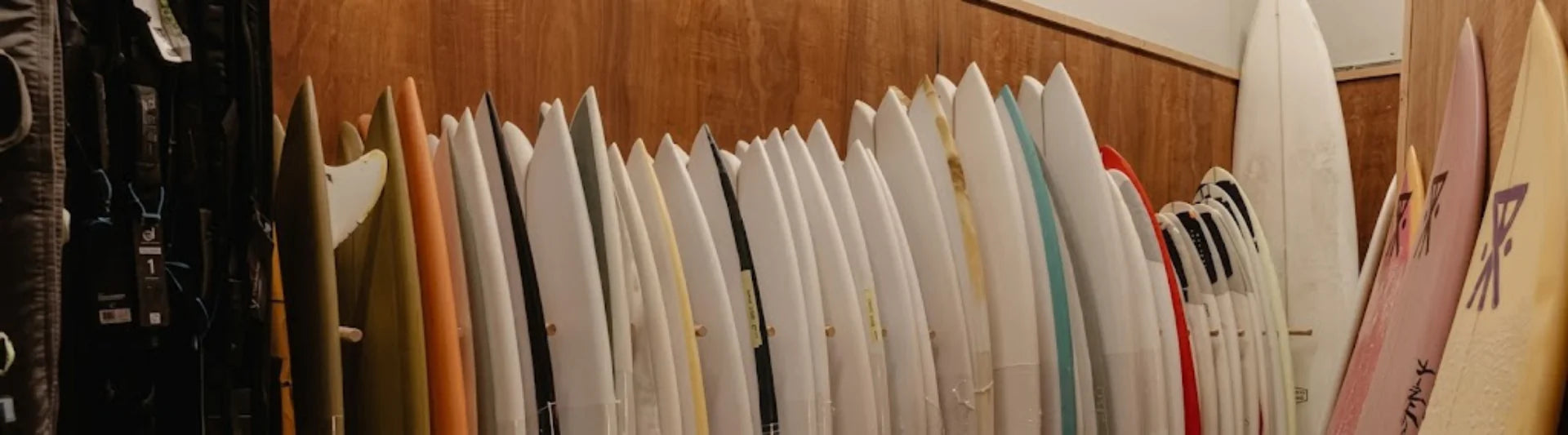
Squash, round, pin, swallow, fish, and bat tail boards, shaped and glassed at our Costa Mesa shop.
Which Tail Shape Should You Choose?
- Choose a squash tail if: you want one board that handles most days without compromise.
- Choose a round or pin tail if: you're surfing bigger, more powerful waves and need the board to hold instead of skate out.
- Choose a swallow or fish tail if: your local surf is usually small and soft and you need help finding speed.
- Choose a bat tail if: you like how a round tail holds but want a bit more pivot on demand.
None of these shapes are right or wrong on their own. They're right or wrong for the waves you actually surf, which is the first question we ask before shaping anything.
Tell Us Your Waves. We'll Tell You the Tail.
Start a conversation with a shaper before you order, custom or off the rack.
Talk to a Shaper →Free shipping on most US orders over $99 (exclusions apply).
Frequently Asked Questions
What's the most common surfboard tail shape?
The squash tail. It balances hold and release well enough to work across most wave conditions, which is why it's the default shape on the majority of shortboards.
Does tail shape matter more than rocker or rail shape?
No single element decides how a board rides. Tail shape, rocker, and rail work together, but tail shape has the most direct effect on how the board releases out of a turn and how it holds in powerful surf.
Can one board have two different tail shapes, like a swallow and a squash?
Not exactly, but a swallow tail is really a modified squash or round tail with a notch cut in. It's best understood as a variation on those shapes rather than a separate category.
What tail shape is best for a beginner?
A squash or round tail on a board with extra volume. Pin tails and fish tails are built for specific conditions and skill levels that a beginner usually hasn't reached yet.
Do bigger waves always need a pin tail?
Not always, but as wave size and power go up, the case for a narrower tail (pin or round) gets stronger because the board needs to hold a line instead of sliding out under speed.
The Right Tail Comes Down to Your Waves
Squash for an all-around board, round or pin when the waves get serious, swallow or fish when you need speed out of nothing, bat tail if you want a round tail with a bit more snap. There's no universally correct tail shape, only the one that matches the surf you actually paddle out into. That's the same question we ask every rider who walks into the shop, whether they're ordering their first board or their fifteenth.
Ready to Get the Tail Right?
Browse boards built with every shape above, or start a custom build with a shaper who'll ask about your waves first.